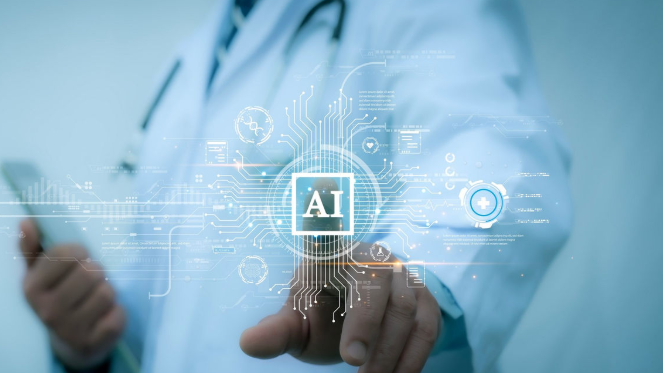
AI is transforming healthcare by improving diagnostic processes and personalizing treatment approaches. Advanced algorithms analyze medical images with remarkable precision, while predictive analytics identifies patients who may require early intervention. Moreover, the integration of AI with personalized medicine allows for tailored therapies based on genetic information. As these technologies advance, the implications for patient care and outcomes are profound. What remains to be explored is the full extent of AI’s potential in reshaping healthcare practices.
Enhancing Diagnostics With AI Technology
As healthcare continues to evolve, the integration of artificial intelligence (AI) technology has emerged as a pivotal force in enhancing diagnostic accuracy and efficiency.
AI algorithms, particularly in image analysis, enable the rapid interpretation of complex medical images, improving outcomes.
Moreover, data integration facilitates comprehensive insights from diverse sources, ensuring that healthcare professionals make informed decisions, ultimately advancing the overall quality of patient care.
See also: How 3D Printing Is Changing Manufacturing
Personalized Medicine: Tailoring Treatments for Patients
While advancements in medical research have traditionally followed a one-size-fits-all approach, the emergence of personalized medicine has shifted the focus towards tailored treatments that cater to individual patient needs.
By utilizing genetic profiling, healthcare providers can achieve treatment optimization, ensuring that therapies align more closely with a patient’s unique genetic makeup, thus enhancing effectiveness and minimizing adverse effects.
Ultimately, this fosters a more liberated healthcare experience.
Improving Patient Care Through Predictive Analytics
The integration of predictive analytics in healthcare builds upon the advancements in personalized medicine by leveraging vast amounts of patient data to forecast outcomes and improve care delivery.
Through effective data integration, healthcare providers can identify at-risk patients, tailor interventions, and optimize treatment plans, ultimately enhancing patient outcomes.
This proactive approach empowers both patients and providers to make informed, timely decisions in healthcare.
The Role of Robotics in Surgical Procedures
Robotics has increasingly transformed surgical procedures by enhancing precision and minimizing invasiveness, contributing to improved patient outcomes.
Robotic assistants are now integral to various surgeries, allowing surgeons to execute complex tasks with unparalleled accuracy.
This advancement not only reduces recovery times but also decreases the risk of complications, showcasing how surgical precision can be significantly elevated through innovative robotic technologies in healthcare.
Conclusion
In conclusion, as AI technology continues to advance, its impact on healthcare becomes increasingly profound. Diagnoses are becoming sharper, treatments more personalized, and patient care is evolving through predictive analytics. Coincidentally, the integration of robotics in surgical procedures further enhances precision and efficiency. Together, these innovations are not merely coincidental but are harmoniously shaping a future where healthcare is not only smarter but also more attuned to the needs of each individual, promising improved outcomes for all.